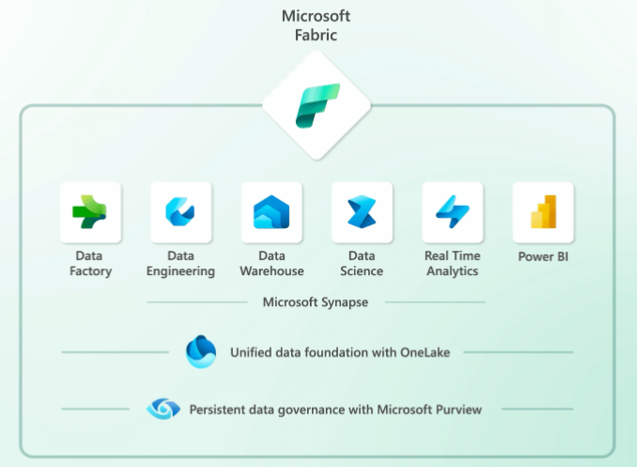
Microsoft Fabric is a new data platform that integrates various data and analytics tools, such as Azure Data Factory, Azure Synapse Analytics, and Power BI. It enables data professionals to build end-to-end analytics solutions with a unified experience and architecture. In this blog post, we will explore what’s new in Microsoft Fabric and how it differs from Synapse Studio.
Synapse Studio is a web-based user interface that allows users to manage and develop various Synapse resources, such as data pipelines, SQL pools, Spark pools, notebooks, and more. Synapse Studio is still available as a standalone product, but it is also integrated into Fabric as one of the role-specific experiences.
MS Fabric offers several advantages over Synapse Studio, such as:
- A single sign-up and sign-in process that gives users access to all the Fabric features and services within seconds.
- A seamless integration of Power BI for data visualization and reporting, as well as Azure OpenAI Service for generative AI and language modeling.
- A simplified collaboration across different roles and teams, with features like semantic link, shared workspaces, and code repositories.
- A built-in MLFlow model and experiment tracking powered by Azure Machine Learning, as well as SynapseML Spark library for scalable machine learning.
- A support for open Delta Lake format that allows users to version datasets and create reproducible machine learning code.
Microsoft Fabric is designed to be the data platform for the era of AI, where data science and machine learning are essential for unlocking the value of data. By using MS Fabric, users can easily enrich their data with predictive insights and create organization-specific AI experiences. To learn more about MS Fabric and how to get started, visit https://fabric.microsoft.com.

 Simplyfies